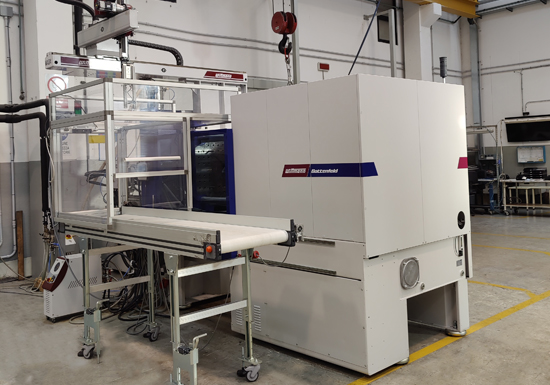
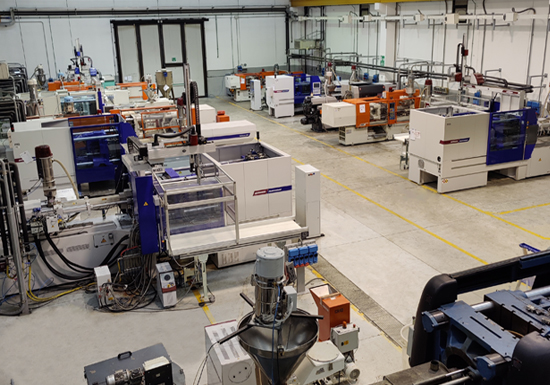
The injection moulding operations take place in a new facility of our own, covering 1,200 m² with an outdoor area of 3,000 m². The old workshop (1,000 m²) is now used as a warehouse. Metalplast
Moulding is carried out with thirteen efficient and modern injection presses, managed through a fully computerized production process, with clamping forces ranging between 50 and 380 tons. Metalplast The items produced range from very small pieces up to a maximum weight of roughly 1,500 grams. The production cycle also uses various supporting equipment such as manipulators, exhaust systems, dehumidifiers, masterbatch dispensers, temperature regulators, and hot-runner mold control units.
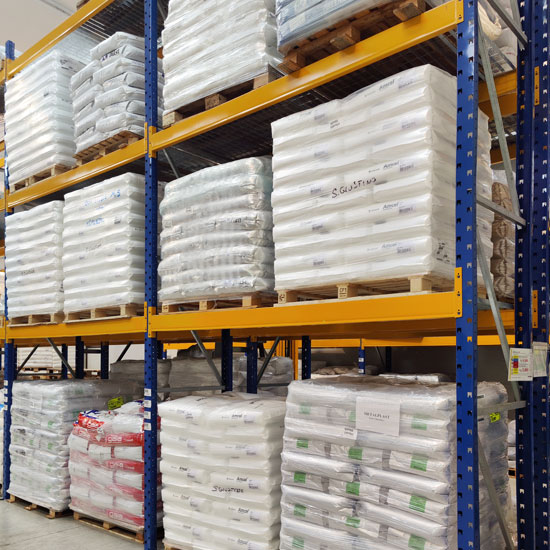
METALPLAST works closely with clients in choosing the optimal materials during the design phase of new items. Metalplast The materials mainly used are technopolymers:
Polyamides
Polycarbonate
PPS (Polyphenylene Sulfide)
PBT (Polybutylene Terephthalate)
POM (Polyoxymethylene)
ABS (Acrylonitrile Butadiene Styrene)
PAI (Polyamide-Imide) (e.g. Torlon) Metalplast
The plastics injected by METALPLAST are mostly technical technopolymers, polystyrene, and polyolefins. Metalplast The company is specialized in moulding PAI (polyamide-imide) using Torlon. The imidization process of PAI is carried out internally through a dual-controlled thermal chamber. Metalplast
Alongside traditional thermoplastics, METALPLAST has introduced fully natural materials in production which, being 100% biodegradable, ensure respect for the environment. In addition to these, METALPLAST can also employ hybrid bioplastics and sustainable, innovative plastic composites that combine the characteristics of plastic with those of already used or waste materials. Metalplast
The production department occupies an area of 1,200 m² and includes a machinery park consisting of 13 injection moulding presses with clamping forces between 50 and 380 tons; the weight of the moulded item can vary from a few grams up to 1.5 kg.
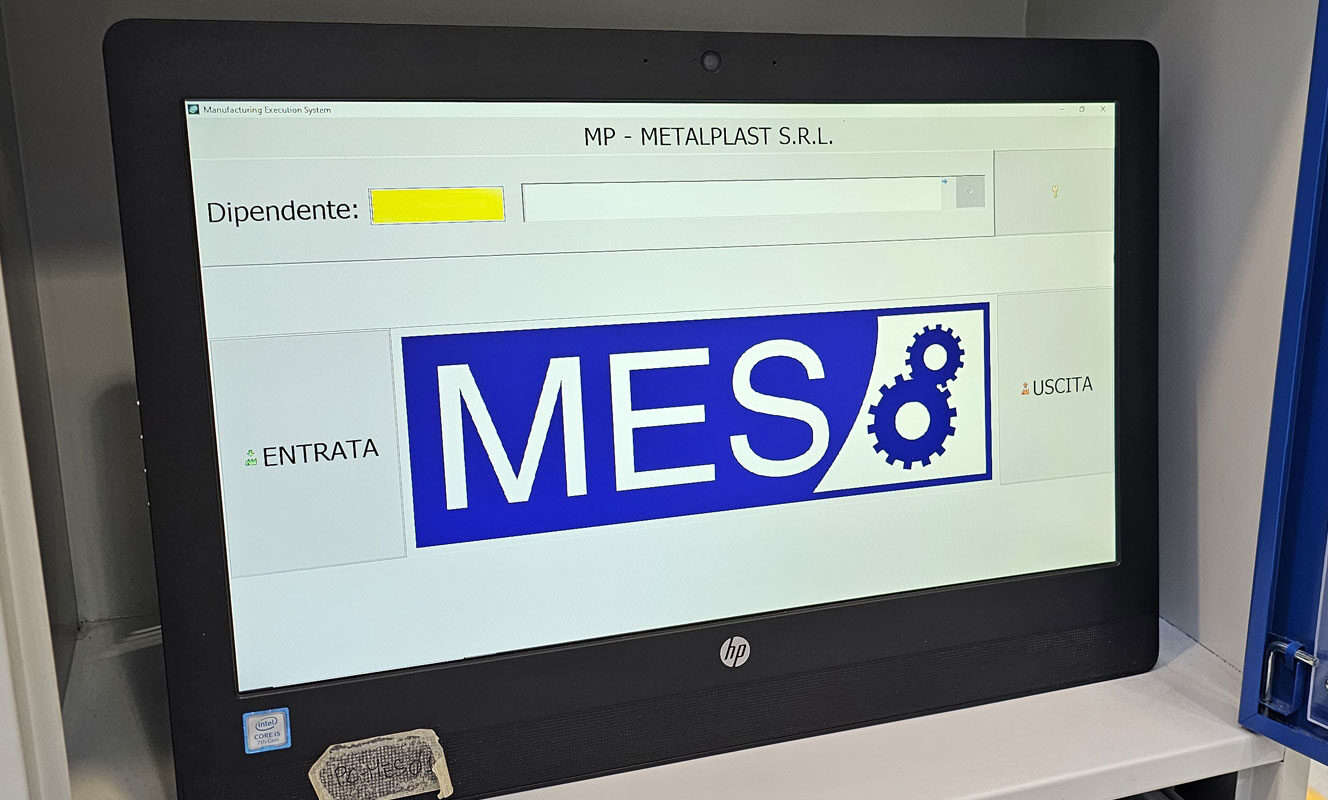
The integration of ERP has allowed automation of almost all production and logistics activities, optimizing response times and increasing precision and reliability.
Systematic and guaranteed quality control over components and processes throughout the production activity.
100% traceability.
Assembly.
Over-moulding operations (plastic + inserts).